




Guide: What is Raw Denim, really? And what is fading?
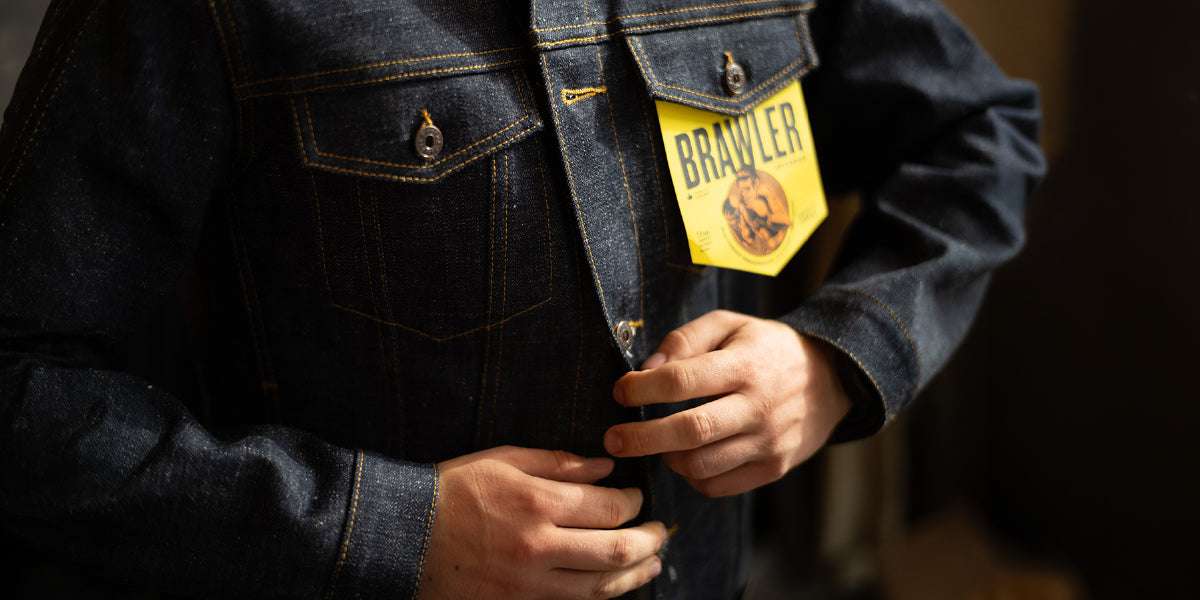
Raw denim is jeans in their purest form. Unlike regular jeans you find in large clothing chains, raw denim has not been washed or treated by the factory. They haven't developed their fades yet.
Many prefer raw denim because they want to personalize their jeans through their own wear and tear. The result is a unique pair of trousers that tells the entirely unique story of you.
What differentiates Raw Denim from regular jeans?
Modern jeans are often subjected to industrial processes to appear worn out immediately. They are washed with chemicals to lighten them (stone washing or bleaching) and exposed to mechanical wear with sandpaper or laser to mimic several years of use.
Raw denim, however, is completely untreated. This means that:
- The fabric is stiffer and darker initially.
- The fibers are intact and have maximum strength.
- You avoid paying for someone to have "pre-worn" your jeans.
How does the denim evolve?
What makes this journey so exciting is the process of fading itself. This is when the indigo color gradually wears away at the points you use most, creating a pattern that is 100% unique to your body and lifestyle.
Want to know more about fading? Read our guide: What exactly is fading?
Why choose Japanese Raw Denim?
Most of our customers choose Japanese raw denim because they value quality and authenticity. When denim is produced in Japan on old shuttle looms, the fabric acquires a unique character and a visible selvage edge – the iconic selvedge ID that shows when you do a cuff or stack.
You get jeans with superior durability, often with exciting textures like slub or an uneven neppy texture.
More authentic and sustainable
It's a simple equation: jeans that are not chemically bleached or laser-worn have stronger fibers and naturally last longer. This makes raw denim itself a more sustainable choice.
At the same time, those who are passionate about this are uncompromising on quality. If you're going to create something so time-consuming to produce, it would be hopeless to choose a raw material of poor quality. Therefore, Japanese raw denim and selvedge jeans have higher quality at every stage: the cotton quality is better, the spinning is better, the dyeing is deeper, the weaving is more complex, and the stitching is rock-solid. The only thing that might not be on par with "fast fashion" brands is the marketing budget – here, it's the craftsmanship that speaks.
A warning about quality
Today, there is also "raw denim" produced in low-cost countries. Although these can also have a selvedge edge, there is a big difference in the quality of the cotton and the ethical conditions. We focus on brands that put craftsmanship first.

Written by Inger Kristin Haugsevje


