

Guide: What is rope dyeing and how does it affect fades?
If you really want to understand why raw denim jeans evolve the way they do, you need to know what happens in the dye vat. This is where the magic begins, and it's where the difference between a cheap pair of jeans and a Japanese masterpiece becomes clear.
From green water to blue jeans: How oxidation works
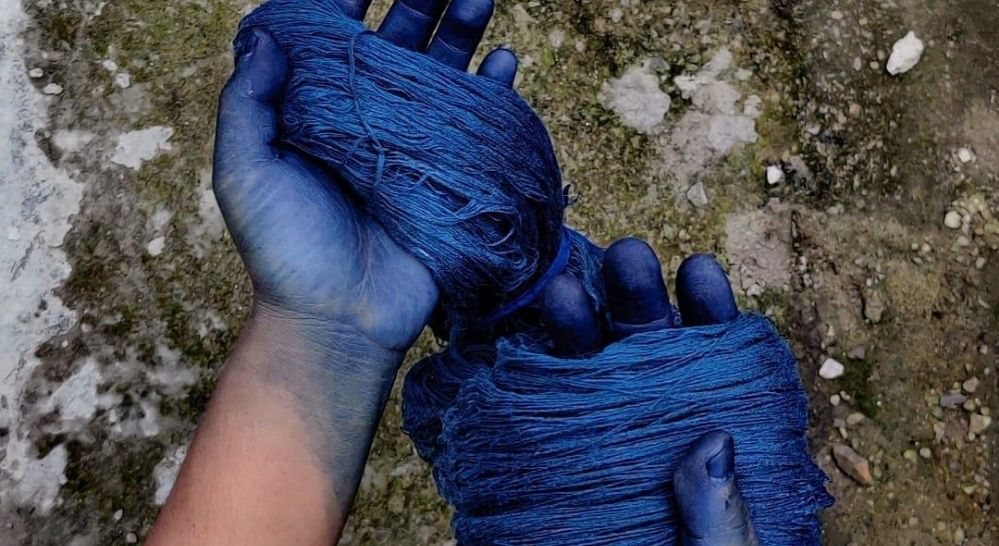
Traditional Japanese indigo dyeing starts with the Indigofera plant. The plant is placed in a water bath for fermentation, and the result is a dye bath that is actually green.
When the cotton thread is dipped into this bath, nothing happens to the color immediately. It is only when the thread is pulled out and meets the oxygen in the air that the chemical reaction begins. This process is called oxidation. The moment the pigments hit the air, they change color from green to the deep indigo blue we love.
Since the thread is dyed in layers, you will often see a slight greenish tint (greencast) in the innermost layers that have not had time to oxidize completely.
What is Rope Dyeing?
To achieve the deep, dark color we expect from raw denim, one dip is not enough. The threads are gathered in long bundles (ropes) and dipped into the dye bath countless times. This method is called rope dyeing.
The consequence of rope dyeing is crucial for the future of the jeans:
- The indigo color settles on the outside: The color only penetrates the outermost fiber layers of the thread.
- The white core: The cotton remains almost completely white in the center of the thread.
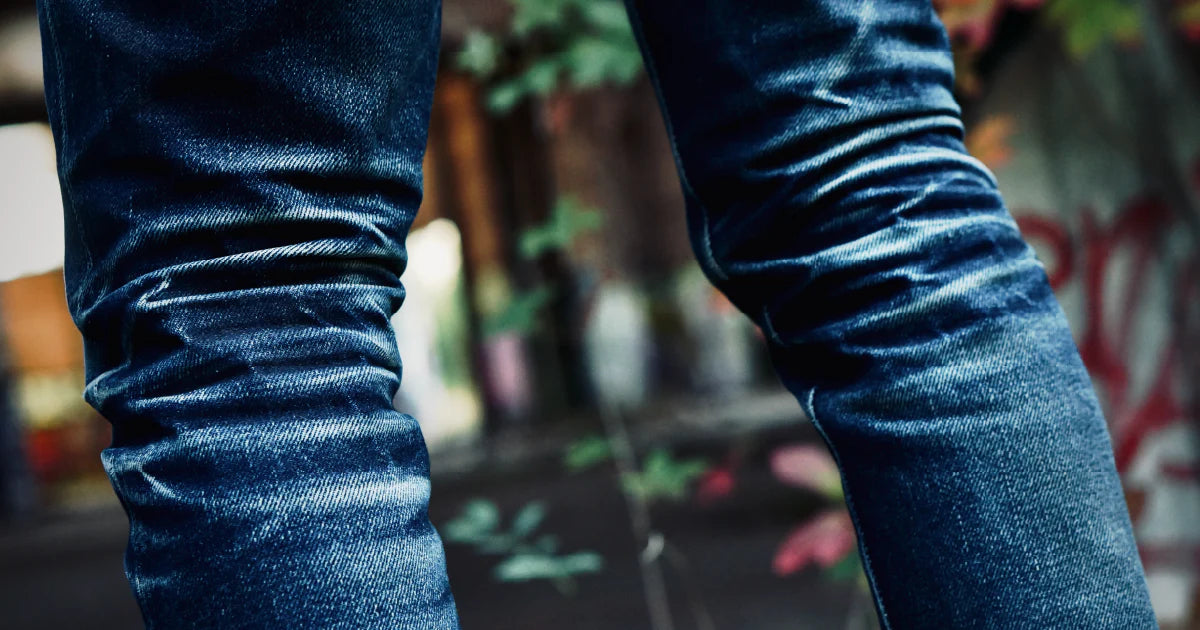
This is the key to fades. When you wear your jeans and expose the threads to friction, the outermost indigo layers wear away, and the white core becomes visible. Without rope dyeing, we would never get the contrasts we look for in quality jeans.
Indigo needs no "help"
Unlike most other dyeing methods, indigo does not need chemical fixation to set. Usually, the yarn must be treated after dyeing for the color to adhere to the fibers. For indigo, oxidation is the fixation itself.
This makes indigo a unique dye that is meant to live, change, and gradually fade as you wear your pants.
Want to learn more about how to care for the color?
Once you know how much work goes into the dyeing process, you also understand why we are so meticulous about how you wash your pants:
-
The ultimate washing guide – How to wash without ruining the oxidation process.
-
Washing jeans in vinegar? – Why acid can actually damage your indigo color.
-
The ritual: How to hand wash your jeans – The gentlest method for natural indigo rope dyed denim.

Written by Inger Kristin Haugsevje